Risks roofing contractors face
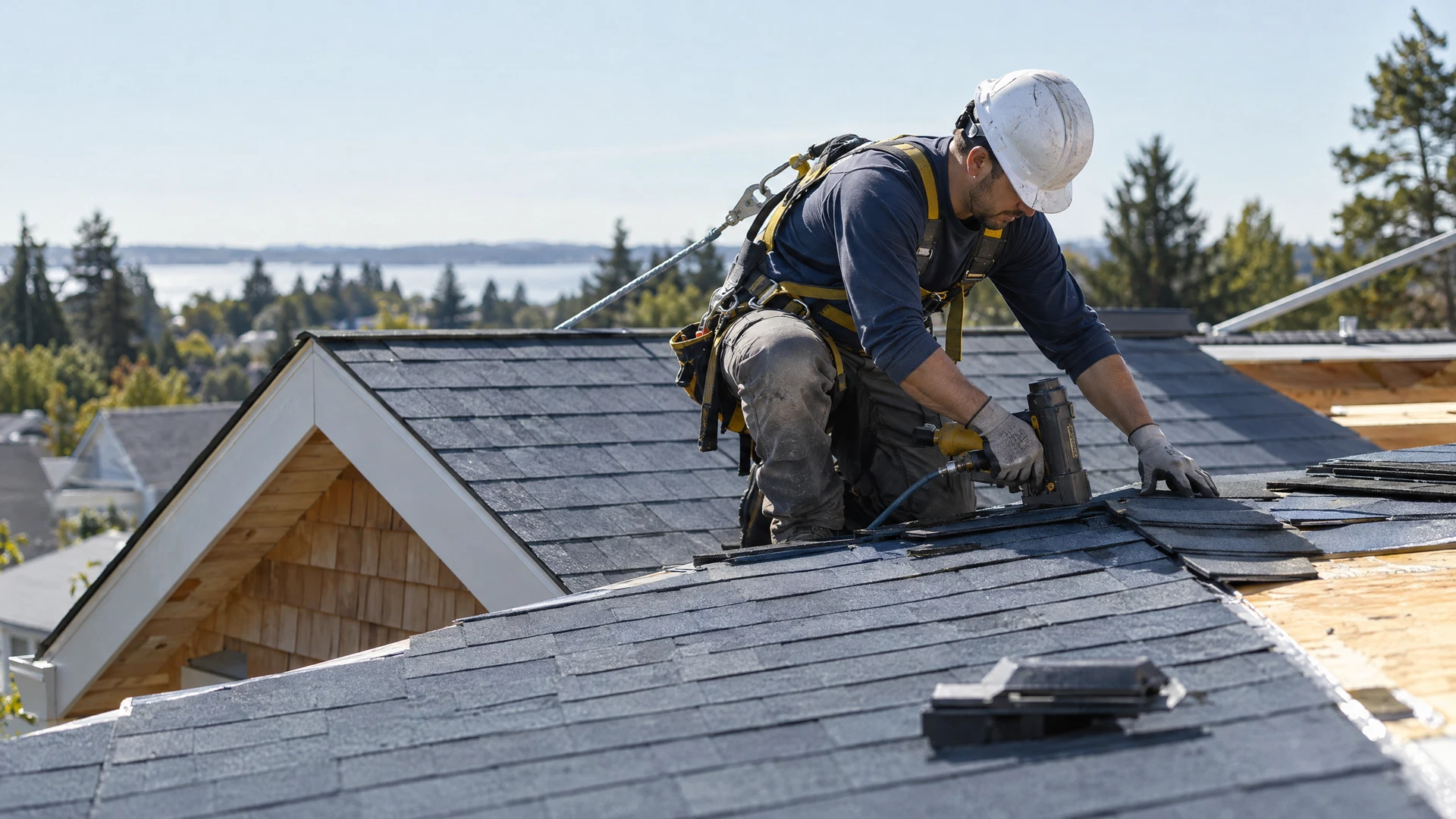
Roofing work can expose your business to injury and property damage claims. A falling tool could damage a customer’s vehicle, or a visitor could be injured by debris around the jobsite. After a roof is finished, a customer might allege that a leak damaged the building’s interior.
Roofers also face injuries while working at height or using ladders. Roofing operations may involve electrical, tool and heat hazards. Tools can be stolen and work vehicles can be involved in collisions. These are hypothetical examples; different policies address different risks, and any claim depends on its facts and the policy terms.
Who may seek roofing contractor insurance?
Independent roofers and businesses installing, repairing, replacing or maintaining roofs may want to explore coverage. Tell your agent whether you work on homes, commercial buildings or both, and whether your projects involve steep or flat roofs.
Describe your materials, roof heights, work methods and the roles of employees and subcontractors. If you use a torch or other open flame, mention it when applying so it can be evaluated during underwriting. These examples do not guarantee eligibility; available coverage depends on the business and the insurer’s criteria.
General liability insurance for roofers
Roofing general liability insurance may help with covered claims that your business caused bodily injury to someone else or damaged their property. It may also help pay for the defense of a covered claim. For example, a customer might claim that falling roofing material damaged a parked vehicle.
Ask about products and completed-operations coverage for claims arising after your work is finished. The Texas Department of Insurance explains that damage caused by completed work can be treated differently from damage to the work itself. Coverage depends on the policy, endorsements, claim facts and applicable law.
Tools and equipment coverage
General liability is not designed to insure your own property. Separate tools and equipment coverage may help with covered theft or damage to items such as nail guns, ladders and compressors. Inland marine insurance is often used for property that moves between locations or is in transit, according to the North Carolina Department of Insurance.
Ask whether equipment is covered at jobsites, in transit and while stored in a vehicle. Review theft conditions, item limits, deductibles and valuation. Do not assume a business property or auto policy covers tools in every location.
Commercial auto insurance
A roofing business may use pickups, vans or trucks to carry crews and supplies between jobs. Commercial auto insurance may address covered liability arising from business vehicle use. Damage to your own vehicle depends on the coverages selected and the policy terms.
A personal auto policy may not cover every business use. Discuss each vehicle and its drivers, including personally owned vehicles used for work, and ask whether hired or non-owned auto coverage is appropriate. Tools carried in a vehicle may need separate coverage.
Workers’ compensation for roofing businesses
Workers’ compensation may provide medical care and wage-replacement benefits for eligible work-related injuries or illnesses. Some employers must provide coverage, but requirements vary by state, business structure, type of work and worker status.
If you work alone or hire subcontractors, do not assume you are exempt or that an owner is automatically covered. A customer contract may also require coverage. Check the rules for your circumstances with the appropriate state workers’ compensation authority; the U.S. Department of Labor lists state officials in the resources below.
Business owners policies
A business owners policy, or BOP, generally combines commercial property and liability coverage in one package. It may be worth discussing if your business has property as well as liability exposures. Some packages may also include business income coverage for a covered interruption.
Not every roofing business will be eligible, and included coverages vary. A BOP does not automatically replace commercial auto, workers’ compensation or coverage for tools at every jobsite. Ask which options are available for your operations and review their terms.
Exclusions and customer requirements
A liability policy may cover qualifying damage to other property caused by completed work, while the cost to repair or redo your faulty work itself may be limited or excluded. Damage to property being worked on, pollution and certain operations may also be limited or excluded depending on the policy. Ask about any water-damage restrictions and review all endorsements.
Check subcontractor conditions and discuss how subcontractors’ work and insurance are treated. Customers or general contractors may request particular limits, certificates of insurance or additional-insured status. A certificate summarizes coverage; it does not itself change the policy. Review the contract and policy together rather than assuming a request is automatically satisfied.
How much does roofing contractor insurance cost?
There is no single roofing insurance cost. Insurers may consider your locations, residential or commercial project mix, roof heights and slopes, materials, work methods, revenue, payroll, employees, subcontractors and claims history. Coverages, limits and deductibles also matter; vehicle and equipment details can affect the relevant policies.
If you are looking for affordable or cheap roofing insurance, compare covered operations, exclusions and limits as well as the premium. A higher deductible may lower the premium but can leave your business paying more of a covered loss. Rating and eligibility vary by insurer.
Prepare for a free roofing insurance quote
Tell ABC Contractor Insurance about the work you actually perform so available options can be evaluated accurately. Have the following information ready:
- Your business name, locations and services, including residential and commercial projects, typical roof heights, slopes and materials.
- Your work methods, including any torch or other open-flame use, and any fall-protection practices or training you can describe.
- Estimated annual revenue and payroll, employee duties, and details of subcontractors and their insurance.
- Equipment and tool values and storage locations, vehicles and drivers, and prior insurance and claims history.
- Customer or general contractor requirements, including requested limits, certificates and additional-insured endorsements.
Common questions
How much does roofing contractor insurance cost?
Cost depends on your work and locations, roof heights and slopes, revenue or payroll, employees, subcontractors, claims history, and the coverages, limits and deductibles selected. Equipment and vehicle details can affect the relevant policies. Request a quote based on your business rather than assuming a standard price.
What insurance does a roofing contractor need?
There is no single package for every roofer. General liability, tools and equipment, commercial auto and workers’ compensation address different risks. Applicable state rules and customer contracts may impose requirements. Review your operations and the terms of the options available to you.
Does a self-employed roofer need insurance?
Working alone does not eliminate the risk of a claim or loss. A contract or applicable law may require particular coverage, and some owners choose insurance to manage business risks. Workers’ compensation requirements and owner coverage options vary by state and circumstances.
What does roofing liability insurance cover?
General liability may help with covered claims for third-party bodily injury or property damage and related defense costs. Ask whether products and completed-operations coverage applies to your work. Repairing your own faulty work may be limited or excluded, and coverage depends on the policy and facts.
Can I get roofing insurance without employees?
A business without employees may be eligible for liability and other coverages, subject to underwriting and availability. Workers’ compensation requirements and owner coverage options vary by state and circumstances. Customer contracts may also set insurance requirements.
Does roofing insurance cover tools and equipment?
Not automatically. General liability addresses covered liability claims, not loss of your own tools. Ask about tools and equipment coverage, including covered causes of loss and locations, limits, valuation and deductibles. Theft from a vehicle may be subject to conditions.
How do I get a roofing contractor insurance quote?
Request a free quote from ABC Contractor Insurance and describe your projects, roof heights and slopes, work methods, revenue or payroll, employees and subcontractors. Share equipment and vehicle details, prior claims and customer insurance requirements. Options depend on eligibility and availability.
How can I find roofing contractor insurance near me?
ABC Contractor Insurance helps roofing businesses explore coverage nationwide, subject to availability. Request a quote to discuss your work and the options available in your state.
Helpful resources
These independent resources provide more information about this topic.
- California Department of Industrial Relations: Construction safety topics
- Texas Department of Insurance: Commercial general liability and exclusions
- North Carolina Department of Insurance: Business insurance types and inland marine
- New York Department of Financial Services: Small business insurance and BOPs
- U.S. Department of Labor: State workers’ compensation officials
This information is general and is not a policy or legal advice. Coverage, exclusions, limits and eligibility depend on the policy, insurer, state and your circumstances.
Ready to explore your options?
Tell us about your work and we’ll help you find out what coverage may be available.
GET A FREE QUOTE